"I'm so tired!": if you often say or think something like this, you're not alone. More and more people are overwhelmed by a hectic pace, a thousand commitments, long working hours, responsibilities and worries of all kinds. When your energy seems insufficient, things get complicated and everyday life becomes even harder to face. How can you recharge? For example, by using one of the most powerful energisers: spirulina. This article explores the close link between spirulina and energy to help you make this extraordinary natural food your daily vitality booster. Find out more!
Why spirulina gives you energy
A bit of tiredness at the end of a busy, active day can even be pleasant, as a sign of a certain satisfaction. But when tiredness hits in the middle of the day, or even in the morning, getting through all your planned activities becomes hard work. And if this state goes on over time, your physical and mental wellbeing suffers: exhaustion sets in, along with the feeling of being drained, with no strength or energy. Is it just a question of lifestyle, or is there more to it?
Often, behind certain conditions there is a lack of vitamins or protein: spirulina may be the most suitable natural food to make up for these shortfalls. The reason is that it is a true concentrate of:
- amino acids, essential for the proper functioning of the body's metabolism, in particular for increasing muscle endurance, preventing muscle strains and tendon injuries, rebuilding muscles, stimulating insulin production and fixing calcium in the bones;
-
B vitamins such as B1 (thiamine), B2 (riboflavin), B3 (nicotinamide), B6 (pyridoxine), B9 (folic acid) and B5 (pantothenic acid), which make an important contribution to general wellbeing by improving the mechanisms that aid recovery;
-
proteins, essential macronutrients for tissue growth and renewal, efficient immune defences and blood oxygenation;
-
minerals such as iron, calcium, magnesium and potassium, essential for giving the body the energy it needs and reducing feelings of exhaustion and fatigue;
-
antioxidants, which prevent the formation of free radicals, helping to counter inflammatory processes and cellular ageing.
After all, the virtues of spirulina have been known since ancient times. Its use is documented in the Far East as early as 6000 BC, when coastal peoples ate it widely. A habit they shared with the Mexican peoples at the time of the Spanish conquistadors and with various African tribes, who used it (and still use it) to prepare various traditional foods.
Awareness of the remarkable health benefits of spirulina has led over time to more scientific research into its characteristics and to cultivation in artificial tanks and ponds. For some time now, the cultivation and processing of this exceptional product has also spread to the West, including Italy.
We at Spirulina Becagli are a leading name in this new made-in-Italy sector, thanks to our high specialisation in growing organic spirulina: a product with ancient roots and at the same time focused on the future of nutrition and wellbeing. But let's take a closer look at the properties that make this superfood one of the most powerful energisers.
The benefits of spirulina as an energiser


It has been shown that adding a dose of spirulina to children's diets can improve their health and energy as they grow, while it can give adults great strength and wellbeing. But the benefits of spirulina as a natural energiser are many, and include providing:
-
more physical and mental energy, which the body can use in a balanced way without significant side effects. In weighing up the pros and cons of spirulina, the advantages are countless, while contraindications only concern people with phenylketonuria or autoimmune diseases;
-
greater resistance to fatigue, thanks to its structural and strengthening action on bones, muscles, tendons and ligaments;
-
better sporting performance, to cope with training and recover energy after exertion, thanks to its tonic and restorative effects;
-
more concentration, as it contains elements that contribute to mental wellbeing, such as beta-carotene, phycocyanin and polyphenols;
-
more satiety, proving useful in low-calorie diets as a slimming and metabolism-activating factor. The plant proteins it is rich in stimulate the secretion of cholecystokinin, which satisfies the appetite, and at the same time increase the energy needed to process food (thermogenesis);
-
stronger immune defences, needed both to fight seasonal illnesses and to regain strength after convalescence and illness.
How to use spirulina for more energy

Since food is the fuel for body and mind, a healthy, balanced diet is an essential step towards having the energy you need to face your days at your best. You need vitamins. You need protein. Nutrients you can get by taking 2 to 5 grams of dried spirulina a day: an energy booster to make you feel good.
You can use it as a supplement with:
-
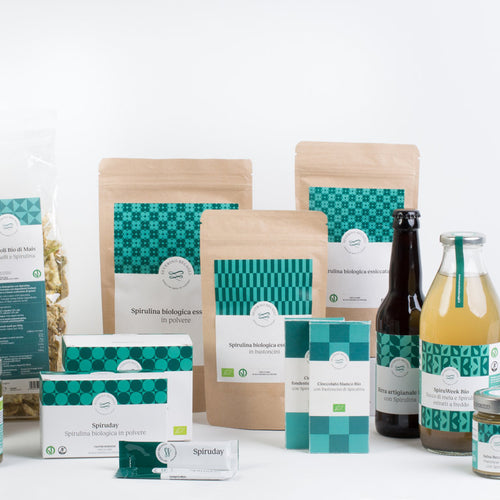
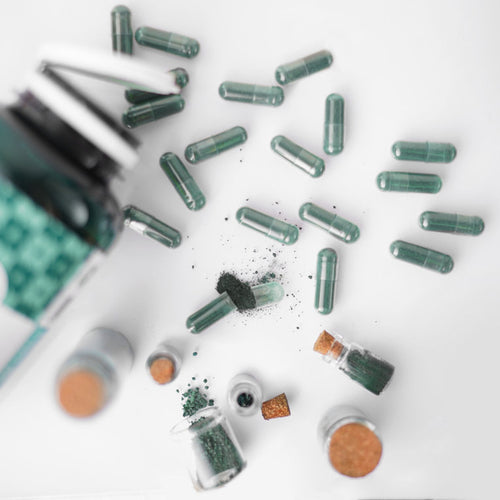
organic spirulina capsules in packs of 540, 180 or 45;
-
organic spirulina tablets in packs of 540 or 180;
-
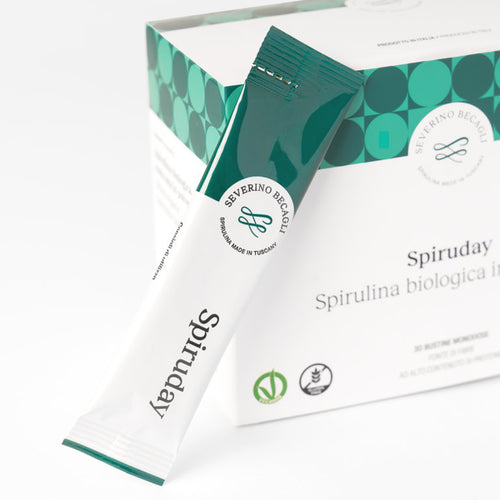
organic spirulina single-dose sachets for a monthly or weekly supply.
-
at breakfast, with an orange and lemon juice enriched with spirulina: an excellent idea for anaemia or iron deficiency, as vitamin C increases the bioavailability of the iron that spirulina is rich in;
-
at lunch, with spirulina pasta, dressed with a drizzle of raw oil or with your favourite sauce: a dish suitable for everyone because it is vegan, gluten-free, high in protein and more filling than traditional pasta, with a lower glycaemic index;
-
at dinner, with a protein-rich alternative to soups in the form of a legume cream enriched with spirulina, or with an omelette of seasonal vegetables in which spirulina can add flavour as well as nutrients and energy.
You can use it as a hunger-curbing snack:
-
as sticks to munch on, with a crunch like crisps;
-
as protein bars in hazelnut, peanut, coconut, passion fruit and goji berry flavours.
Remember that the daily dose of spirulina can vary according to factors such as age, diet, lifestyle, metabolism and sporting activity. That's why we always recommend consulting your doctor or a trusted nutritionist.
For a proper energy supply, also try to keep your meals regular: having three a day plus a mid-morning and a mid-afternoon snack helps distribute energy properly over the 24 hours. Above all, try not to neglect breakfast, the meal that lets you start the day at your best.
Spirulina and energy foods: the right combination to feel charged
- Wholegrain cereals, which are an excellent choice because, as well as being a source of slow-release energy like all complex carbohydrates, they contain fibre that slows their absorption, providing energy spread over the day.


-
Honey, which has high nutritional value and gives the body an immediately available burst of energy.
-
Nuts (such as walnuts, almonds, pistachios, hazelnuts, cashews, etc.), which, eaten at breakfast or as a snack, can give you the energy you need to fight tiredness and tackle your commitments with vitality.
-
Dark chocolate, loved by young and old alike and a source of theobromine, an invigorating substance that increases resistance to exertion and boosts the release of serotonin, an ally of good mood.
7 good habits to manage your energy better
Your energy is a precious resource and so, like any asset, it must be managed properly. As it is not unlimited, it is important to learn to ration it according to your needs so you can complete your tasks and reach your goals.
We have just talked about the role of diet, but another way to save energy and feel less tired is to organise your daily activities according to a balanced, realistic plan. Acting at random and without limits, you risk overloading yourself and spending too much time on non-priority tasks, running short of the energy needed to complete the most important ones. A situation that creates stress, imbalance, a feeling of getting nowhere and even more tiredness. Here are some tips.
-
Try making a list every day of the most urgent or important things to do. Then try to distinguish between activities that cannot be postponed, those that can be moved to another time and everything that represents leisure and rest for you. Then write down a list of essential activities in order of priority, interspersed with some moments of relaxation. As you complete each activity, tick it off your plan: it will give you satisfaction and motivation.
-
At the end of each day, plan the next one, to get ahead and know where to start. A way to avoid the annoying feeling of racing against time.
-
Delegate what you can and learn to say "no" sometimes. Delegating does not mean being less efficient: it means being aware of what you can really do. That's why setting your priorities is essential. Saying "no" is never pleasant, especially if you are a responsible, outgoing person, but it is essential to avoid overloading yourself at the expense of your resources.
-
Avoid multitasking, a false myth that tires the mind, which is forced to handle an overload of information at the same time. Instead, focus on one activity at a time to stay more concentrated and have more energy available.
-
Respect your biorhythm. Are you an owl or a lark? Do you perform better in the morning or in the evening? How many hours of sleep do you need to feel really rested and charged? Connecting with your internal clock can help you organise your days in harmony with your biological cycles and your energy resources.
-
Take time for yourself, because it can really regenerate you, reduce tiredness and improve concentration. You can look after your loved ones and friendships, pursue a hobby, listen to music, go for a walk, read or watch something you're interested in. Moments that, beyond simple rest, get precious energy flowing.
-
Don't neglect physical activity, which releases tension, helps keep you fit and stimulates the production of endorphins and serotonin, the hormones that contribute to your daily good mood, the engine and support of your energy.
With these tips and the support of our certified 100% organic spirulina, we hope we have given you some useful ideas to preserve and improve your energy, feeling good and facing every day with more serenity and satisfaction. For more information on spirulina and its benefits, follow our blog.