When we talk about natural essential amino acids, we mean substances or foods found in nature that can give the body the energy and muscle tone it needs to cope with daily commitments and sporting performance alike. Spirulina belongs to this category and, as such, helps the body strengthen the immune system and regulate the metabolism.
This is thanks to the essential amino acids it is rich in. But before looking at this role, let's ask: what are amino acids and what are they for? How should you take them? What is the difference between amino acids and proteins? Which foods contain the 8 essential amino acids? Let's start answering: read on to find out more!
What essential amino acids are
Amino acids are the molecules that make up the basic building blocks of proteins. Joined together by peptide bonds, they form different types of proteins depending on their sequence and their ends. At their ends, in fact, they can have different chemical structures in the form of an amino group (-NH2: nitrogen and hydrogen) or a carboxyl group (-COOH: carbon, oxygen and hydrogen), a hydrogen atom (H) or a side chain (R).
Once amino acids are eaten with food, the peptide bond holding them together is broken in the stomach during digestion, allowing the small intestine to absorb them easily.
Essential amino acids (also known by the acronym EAA) are those the body cannot produce on its own in sufficient quantities for its various needs, as it can with some non-essential amino acids. To make up for this shortfall and avoid significant health risks, you need to follow a suitable diet or take supplements.
What essential amino acids are for
In general, amino acids are essential for the proper functioning of the body's metabolism. Each amino acid can perform several metabolic functions. For example, it can play a role in the synthesis of hormones and vitamins, in energy production and in the immune response to viral and bacterial attacks.
Essential amino acids, on the other hand, mainly have a structural function that allows them to make an important contribution to:
- producing growth hormone;
- fixing calcium in the bones;
- supplying keratin to the hair;
- preventing muscle strains and tendon injuries;
- increasing muscle endurance;
- rebuilding muscles;
- stimulating insulin production.
In a word, we can say that they are essential for protein synthesis, the biological and biochemical process through which cells build the proteins they need. That's why a deficiency of essential amino acids can have significant consequences and contribute to various health problems.
Which and how many essential amino acids there are
Several scientific studies have identified the variety and quantity of amino acids found in nature. It was found that those essential for protein synthesis number 23, 3 of which have only recently been identified (pyrrolysine, N-formylmethionine, selenocysteine).
Of these, 8 are essential amino acids, which the body cannot synthesise on its own in sufficient quantities to meet its metabolic needs. Specifically:
- phenylalanine, which, among other functions, contributes to the production of adrenaline, melanin and thyroid hormones;
- isoleucine, which contributes to wound healing and supports muscle growth;
- lysine, which supports the immune defences through the production of antibodies;
- leucine, which helps maintain muscle tone and also increases endurance;
- methionine, which helps cleanse the liver, preventing fat build-up;
- valine, which is involved in rebuilding muscle tissue and also in meeting the body's energy needs;
- tryptophan, which helps stabilise mood and the sleep-wake cycle;
- threonine, which, as well as playing a role in the immune system, is involved in forming connective tissues such as collagen, elastin and tooth enamel.
But there is also another essential amino acid that is indispensable during growth: histidine, which benefits cognitive function and has anti-inflammatory properties.
Since, as we have just seen, there are more than 20 different natural amino acids, the possible combinations are endless. Hence the many different proteins, each important for the many needs of the human body. You don't need to take them all, but those relating to the essential amino acids are indispensable.
Choosing a range of foods or supplements every day to make up for the body's essential amino acid deficiencies is the basis for a
healthy life. Here, the so-called biological value is the parameter that assesses the relationship between individual foods and the proteins they allow us to absorb: choosing foods rich in high-biological-value proteins is essential to protect and support the body's various functions.
Foods rich in essential amino acids
Now that we know how many types of amino acids there are, let's look at which foods contain the 8 essential amino acids, since a deficiency can be avoided with a proper diet.
- Meat, eggs, fish and some dairy products provide enough essential amino acids to meet the body's needs, as they are rich in them. Cereals and legumes, on the other hand, although they contain protein, are low in lysine, tryptophan and methionine.
- Spirulina is the only food, apart from breast milk, that naturally provides all 8 essential amino acids. That's why it helps the body achieve the balance it needs to perform all its main functions at its best.
How many essential amino acids to take each day
It is not easy to determine the daily requirement of essential amino acids: every body has specific needs, and the calculation requires a personalised assessment. The World Health Organization, however, has produced a summary table showing the amount of essential amino acids needed according to various parameters (such as body weight and age).
This is an important reference. Nevertheless, we always recommend consulting a doctor or nutritionist to find out how to include foods and supplements containing amino acids in your diet: their support will help you balance your diet according to your needs and lifestyle, to meet the requirements that are right for you.
The benefits of essential amino acids
By following a balanced diet that includes protein foods rich in essential amino acids, the advantages are considerable:
- more toned and resilient muscles;
- stronger ligaments, tendons and nails;
- thicker, healthier hair;
- more energy for body and mind;
- a more efficient immune system in fighting viruses and bacteria;
- proper synthesis of hormones and vitamins;
- better transmission of nerve impulses;
- excellent support for amateur and professional sport.
On the other hand, a deficiency of certain essential amino acids can lead to metabolic dysfunctions and a series of problems that need to be addressed with suitable dietary corrections. In practice, the protein synthesis that regulates the mechanisms behind the body's proper functioning is compromised, with consequences such as weakness, chronic fatigue, lowered immune defences and strain on the heart, liver and kidneys.
Spirulina as an essential amino acid supplement
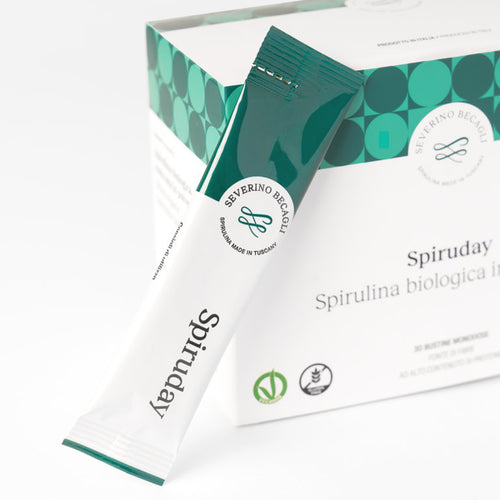
Now that we understand how important amino acids are, the role of spirulina in supplementing the 8 essential ones for our metabolic needs becomes even clearer. This natural substance, commonly known as an alga but actually a freshwater cyanobacterium, is a truly complete food. Indeed, its concentration of plant protein is so high (almost 70%) that it is a superfood like no other.To add it to your diet, Becagli offers you organic spirulina, grown in Tuscany in contamination-free environments using only natural substances and low-impact processes. You can choose from:
- organic spirulina powder, available in 20, 50 or 100 g packs, in sachets or capsules;
- organic dried spirulina, available as sticks or flakes.