Your doctor has prescribed blood tests for a routine check-up. When the results arrive, you notice the asterisk next to your out-of-range LDL values. It is a common situation: about 7.5 million people in Italy suffer from hypercholesterolaemia.* The good news is that you can act on this cardiovascular risk factor with the help of spirulina too. There is, in fact, a virtuous link between spirulina and cholesterol that can help lower so-called bad cholesterol. Did you know?
If not, explore the subject in detail with us at Spirulina Becagli, specialists in organic spirulina grown in Tuscany.
What cholesterol is and why it is important to keep it under control
Cholesterol is a blood fat from the steroid lipid family, which the body produces and absorbs to perform essential functions: for example, building cell membranes, producing hormones and synthesising vitamin D. The problem arises when its level in the blood becomes unbalanced. This does not concern a single blood value, as there are two types of cholesterol:
- LDL (Low Density Lipoprotein), often called “bad cholesterol”, which, in excess, tends to build up in the arteries, increasing the risk of arteriosclerosis and cardiovascular problems such as heart attacks or strokes;
- HDL (High Density Lipoprotein), known as “good cholesterol”, which helps “clean” the arteries by carrying excess cholesterol to the liver, where it is eliminated.
But what makes cholesterol rise? Here are some of the factors that affect it.
- Family history: people whose parents or siblings have high cholesterol may be more likely to develop it themselves.
- Onset of diseases linked to obesity, diabetes, metabolic syndrome or hypertension.
- Ageing, with the body's natural ageing and its consequences.
- Diet: an unbalanced diet, too rich in saturated fats and sugars, can raise cholesterol, since the body does not produce this fat entirely on its own but also takes it in through food.
- Lifestyle: little physical activity, smoking, alcohol and stress are also risks that raise LDL and lower HDL.
Changing your habits and behaviour is a good way to keep your cholesterol within range and help prevent cardiovascular disease. And this is where spirulina comes in: its nutrients can help you protect your heart and arteries naturally, keeping your blood values in balance. Let's see how and why.
Spirulina and cholesterol: some scientific data
Before looking at how spirulina acts on cholesterol, here are some scientific data from the article published on PubMed entitled “study of the hypolipidaemic, antioxidant and anti-inflammatory activity of the microalga spirulina” (table 1):
- in a sample of 30 healthy male volunteers, taking 4.2 g of spirulina a day for 4 or 8 weeks resulted in a significant reduction in total cholesterol and LDL, with a slight decrease in triglyceride levels. The reduction in cholesterol was even greater in men with the highest cholesterol levels.
- in a sample of 36 healthy volunteers, taking 4.5 g of spirulina a day for 6 weeks reduced total cholesterol and triglycerides by 10% and 28% respectively, increased HDL by 15% and lowered systolic and diastolic blood pressure in both men and women.
- in a sample of 12 elderly volunteers, taking 7.5 mg of spirulina a day for 24 weeks reduced triglyceride, total cholesterol and LDL cholesterol concentrations after 4 weeks of supplementation, with no substantial differences between subjects with high, low or normal cholesterol.
- in a sample of 51 elderly women with hypercholesterolaemia, taking 7.5 mg of spirulina a day for 8 weeks contributed to a significant reduction in total cholesterol levels.
- in a sample of 78 healthy elderly people with hypercholesterolaemia, taking 8 g of spirulina a day for 16 weeks significantly reduced total and LDL cholesterol in women. It also showed a significant total cholesterol-lowering effect in men through repeated treatment tests. However, no significant effect on LDL was found in men, while HDL and triglyceride levels did not change after the intervention in either men or women.
How spirulina acts on cholesterol

Spirulina is not only a source of plant protein, an energising supplement and a natural tonic: it is also a valuable support for heart health. What makes it so effective against cholesterol is the natural pigment that gives Arthrospira platensis its typical blue-green colour: phycocyanin, rich in antioxidant and anti-inflammatory properties that act in a targeted way. Let's see how.
Phycocyanin helps reduce systemic inflammation, an often underestimated factor that encourages the build-up of bad cholesterol. It also fights the free radicals that damage blood vessel walls. When vessels are inflamed or oxidised, LDL cholesterol tends to build up more easily, increasing the risk of atherosclerosis.
But that is not all: as we have seen, spirulina can significantly lower total and LDL cholesterol levels, while helping to maintain or increase HDL, the “good” cholesterol. This effect seems to be linked to phycocyanin's ability to modulate the activity of certain enzymes (protein substances that act as catalysts of biological processes) involved in lipid metabolism, thus improving the overall lipid profile.
What is striking is that all this happens naturally, with a gentle but steady action that can really make a difference as part of a healthy lifestyle. The important thing is to choose a safe, certified product. The scientific literature also stresses the need to opt for organic spirulina, grown in purified water under protected conditions, safe from possible environmental contamination. So let's see how to take it.
How to use spirulina to fight cholesterol
An excellent way to enjoy the benefits of spirulina every day is to take it as a food supplement. The recommended amount is 3 to 5 grams a day, taken with plenty of water. But how? Here are some tips!
-
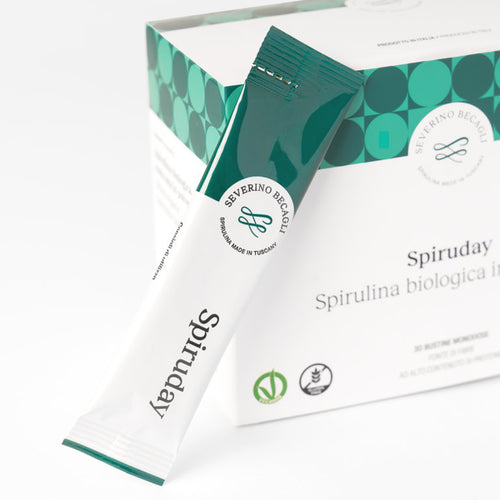
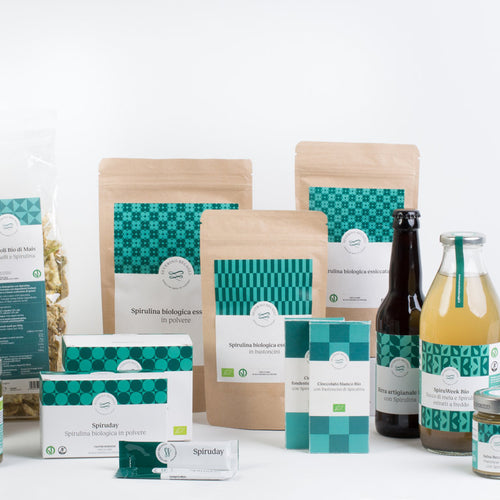
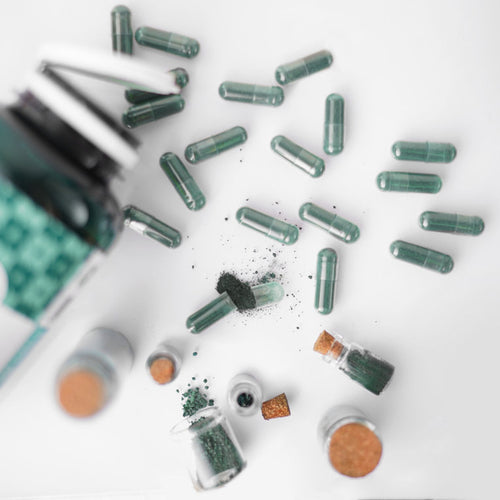
Available formats: you can choose between spirulina tablets, capsules or powder. Tablets and capsules are more practical if you are short of time and want to add spirulina to your daily sources of wellbeing. Powder, on the other hand, is ideal for eating spirulina with your favourite foods and drinks, such as creamy soups, soups, omelettes, yoghurt, juices, smoothies or shakes.
-
When to take it: the best time is in the morning, perhaps at breakfast, to make the most of its energising effect and support your metabolism from the first hours of the day. You can also split it into two doses: one in the morning and one at lunch or in the early afternoon. Just avoid the evening, given its energising effect.
-
For how long: studies suggest that at least 8–12 weeks of daily intake are needed to see improvements in the lipid profile. Of course, it is not a miracle solution: it must go hand in hand with a balanced lifestyle, at the table and beyond.
-
Who should consider it with caution: if you are already being treated for cholesterol or take blood pressure medication, talk to your doctor before starting to take spirulina. The same applies if you have thyroid problems or autoimmune diseases.
Adding spirulina is simple, but it must be part of a wider strategy: eating well, moving more, cutting down on smoking and alcohol. If you want to try it, remember to look for certified quality, organic products free from heavy metal contamination, like those we offer at Becagli.
To discover all the properties and uses of our 100% Tuscan organic superfood, keep following our blog: thank you for reading this far!
The information in this article is not a medical prescription. To treat disorders and diseases related to hypercholesterolaemia properly, consult a trusted specialist, who can advise you on whether to take spirulina as a supplement alongside any medication to bring your blood values back into balance.
*ANSA data, 20 September 2023