Breakfast is the most important meal of the day: doctors and nutritionists always stress this, yet it is too often underestimated. In the morning everyone is in a rush, some dashing to work, some to school, sometimes grabbing a bite on the go or leaving home with just a coffee. Many people skip breakfast, and many others make questionable food choices from the very first hours of the morning, making their day harder from the start.
Why is a good breakfast essential?
As a dietary principle, people who eat little or badly at breakfast tend to be hungrier during the day and therefore inevitably eat more. This is a risk, both nutritionally and for your diet.
Breakfast is an essential meal, the fuel that starts the body up for the day. It must therefore be nourishing and provide what you need to perform properly, at least until lunch. People who tend to eat an unsuitable breakfast will suffer from tiredness, mood swings and difficulty concentrating.
For the metabolism, too, you should start with a substantial meal in the morning and gradually eat less as the day goes on, not the other way round. This is because in the morning the body has to take in fuel for the whole day, so it's fine to eat something filling and energising. The other two main meals only need to recharge you for fewer hours, especially dinner, which should be very light. Instead, people often do the opposite, eating more at dinner and little in the morning.
Improving your diet is possible, and necessary, to counter the signs of time, optimise the energy you need, avoid putting too much digestive strain on the body and, above all, avoid the insulin spikes that can cause damage in the long run.
What does the body need?
To be healthy and fit, the body needs water, fats, carbohydrates, protein, vitamins, minerals and fibre. The food eaten during the five daily meals supplies everything you need, depending on age and sex.
Proteins are essential: made up of combinations of amino acids, they keep antibodies, haemoglobin and hormones working. They build cells, form part of muscles and bones, perform metabolic functions and provide energy. Carbohydrates provide energy and are essential for the immune system, fertility and the body's development, so they should never be cut out completely.
Fats, the good ones, are very important and should not be underestimated. Plant foods are rich in them. Vitamins and minerals are always essential. Our body needs them to function and to avoid health problems. Vitamins are molecules the body uses to develop and function better. They are important at every age and ensure proper growth. Trace elements such as calcium, phosphorus, magnesium, sodium, potassium, iron and zinc are important because they are always involved in the processes the body has to carry out.
Through a healthy, varied and complete diet, people take in all these elements they need. Boosting their intake with spirulina supplements is a useful way to improve your daily intake, because people often do not strictly follow the idea of five daily meals based on fruit and vegetables, with the right amounts of carbohydrates and natural fats. In this way you can get an adequate intake, completely naturally, without having to resort to chemical supplements.
Why do we recommend spirulina for breakfast?

Spirulina is a superfood, rich in micronutrients and proteins that are extremely beneficial for health, and as a concentrate it can directly improve some common problems, such as high cholesterol and blood sugar.
Spirulina for breakfast is useful because it is rich in antioxidants, so it has completely natural anti-inflammatory properties; it improves blood circulation, counters anaemia and can strengthen the immune system and, above all, fight tiredness and fatigue.
We also know that organic spirulina is more than 50% protein, which is in turn made up of amino acids. The amino acids in spirulina (all 21, including the essential ones) are needed for the growth and repair of muscles, skin and bones and help prevent muscle deterioration with age. They also help maintain lean mass and increase the feeling of fullness, supporting weight loss.
Finally, let's not forget that spirulina is a natural energiser, so adding spirulina to your diet, starting with breakfast, will certainly make you feel better and start the day on the right foot.
Discover all the benefits of spirulina and find out more.
What not to eat for breakfast: the morning habits we need to change.
Typical breakfast foods include milk, yoghurt, rusks, fresh fruit, jam and freshly squeezed juice. Of course, biscuits, cakes, brioches and croissants are everyone's morning dream, with a big mug of hot milk or a lovely cappuccino, but we have to reckon with what the body really needs to perform at its best during long days of work or study.
It is not advisable, for example, to eat brioches and croissants every day, because they are rich in animal fats such as butter, sugar and hydrogenated fats, which are not good fats; they are not very filling and are high in calories that we will struggle to burn off during the day. Choose foods that fill you up, and do so in the right way. Cereals are excellent with milk or yoghurt (even better if not of animal origin, for example made from soya, coconut or oats), but only if they are natural and free from sugar and additives. An optimal diet needs plenty of fibre, few calories, and no hydrogenated fats, tropical oils or additives of any kind.
Rusks are like bread: here too, careful selection is important, avoiding those with margarine, tropical oils and preservatives and preferring more natural products, perhaps fortified with iron and vitamins and made with wholemeal flour. To save time and money you can always toast a slice of bread, preferably wholemeal, and spread it thinly with seasonal fruit jam or Italian organic honey, which never goes wrong.
Craving something sweet or a treat is of course normal: in this case it's better to bake a cake or tart at home, perhaps with added spirulina powder or Blue spirulina, to ensure a good supply of vitamins and protein, and to enjoy a good homemade meal with perfectly natural, carefully selected ingredients.
What to eat for breakfast? 3 ideas for a super spirulina breakfast
On average, everyone should get 15-20% of their daily calories at breakfast. So each person needs to know their requirements in order to know what to eat. For optimal intake, your diet must be varied, complete and always healthy, choosing fresh products over pre-packaged ones.
A good breakfast should provide vitamins, antioxidants, fibre, minerals, carbohydrates and also good fats and sugars. This is because it must replenish the body's glucose reserves for the whole day. During the night, the digestive system stimulates the detoxification process. In the morning it needs to be stimulated, without overdoing it.
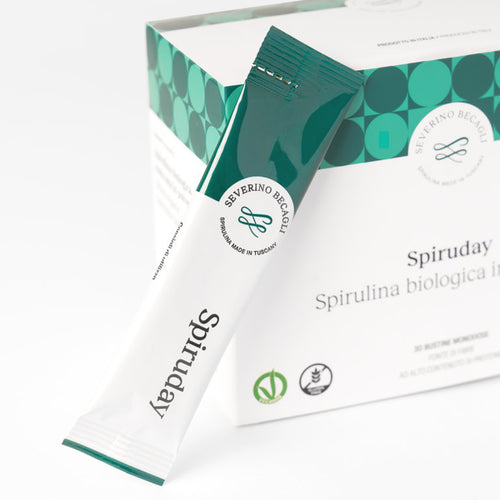
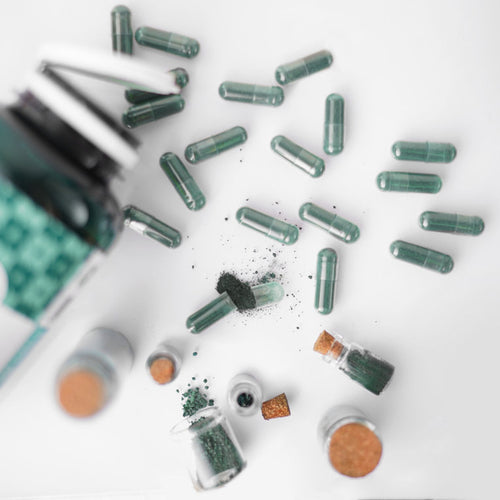
The quickest and easiest way to take spirulina at breakfast is as it is: you can take your daily 3 grams either as 100% natural spirulina capsules or spirulina tablets, cold-pressed so as not to compromise quality.
But read on to start the day in the best way with three ideas for a super spirulina breakfast.
Spirulina smoothie
A spirulina smoothie is a true superfood, extremely quick and easy to make, with a surprising colour, ideal for giving you the right dose of morning energy.
|
Ingredients |
 |
Method
Slice the banana and put it in the blender, pour in the plant-based milk (we recommend coconut or oat) and add a spoonful of spirulina. Blend everything until smooth.
Pour into a glass and, if you like, sprinkle with chopped almonds
Tips
- To make it more refreshing, you can add an ice cube before blending.
- Drink the smoothie straight away, otherwise it will tend to oxidise.
Spirulina protein pancakes with chocolate chips and honey
Spirulina protein pancakes are an excellent alternative to classic pancakes for anyone who wants to start the day full of energy without overdoing the sugar
|
Ingredients |
 |
Method
Put the egg whites and cane sugar in a bowl, whisk, then add the flour, spirulina and baking powder. If the mixture is too thick, you can add a little water.
Now pour 3 tablespoons of batter into a non-stick pan and cook for a few minutes on each side.
Once the pancake is ready, add the honey, a few chocolate chips and some spirulina sticks to make it even crunchier and healthier!
Spirulina porridge
Porridge is a warm treat, a healthy and tasty breakfast, perfect for the coldest mornings, when we need to warm up our body straight away and store up more energy for the day ahead. Have you ever tried it? It's really simple to make!
|
Ingredients |
 |
Method
Put the oats, water and a pinch of salt in a small pan and bring to the boil, stirring. A soft cream will form. If it is too thick you can add a little more water; if it is too runny, keep cooking until it reaches the consistency you want.
Let it cool slightly, add the spirulina from the sachet, stir well and pour into a bowl.
Top with a sliced fruit of your choice, almond butter, chopped dark chocolate and toasted almonds; for extra energy and wellbeing, try adding a few spirulina sticks too, and...
...enjoy your breakfast!
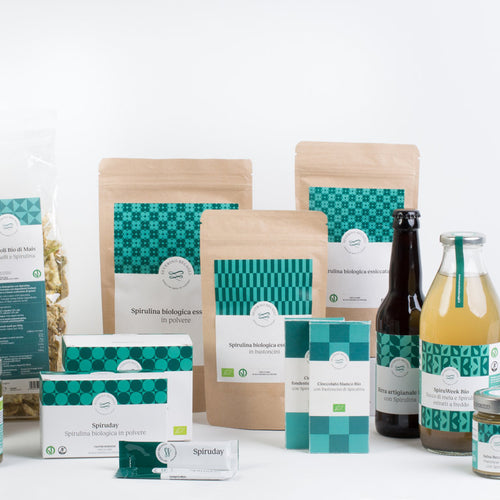
Spirulina is fantastic at breakfast, but not only then... find out how to use spirulina in the kitchen every day to make your favourite recipes unique and special!