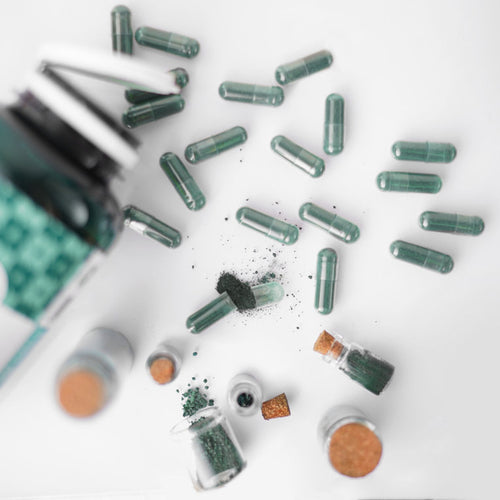
If you are looking for a natural remedy for hair growth, spirulina can be an effective solution. This blue-green spiral microalga is a concentrate of benefits for hair: it makes it thicker, improves scalp health and prevents hair loss. But how does it do all this? And above all, how can you use spirulina for your hair as part of your haircare? Let's find out together by exploring the link between spirulina and hair: the secrets of this extraordinary ingredient will surprise you!
|
|
Spirulina: hair benefits you may not know
Beautiful, healthy hair is an excellent calling card, and a feature that can be very attractive. That's why we invest time and money in heavily advertised products that often have very little effect on our hair's wellbeing. Spirulina, on the other hand, is an effective natural ingredient:
● it makes hair stronger, softer, shinier and deeply nourished;
● it helps rebuild hair structure thanks to essential amino acids that support keratin synthesis;
● it significantly improves the function of all the sebaceous glands thanks to its vitamin A;
● it relieves itching and dandruff caused by the malassezia fungus, thanks to its antioxidants;
● it counters the action of free radicals, slowing down hair ageing thanks to the vitamins K and D and the minerals it is rich in: so much so that, if you use it regularly, you will notice fewer grey hairs, which result from oxidation of the hair fibre;
● it defines curls for soft, voluminous hair.
To sum all this up in the words of Federica Perissinotto, founder of the Adamà brand and an expert in holistic skincare who took part in one of our Spirutalks: “the trace elements in spirulina help us strengthen the hair root, making hair healthier and stronger. Used directly on the hair, spirulina will help us rebalance sebum production. Taken regularly as a supplement, it will be effective against hair loss.” Let's look at this last point in detail.
Spirulina and hair loss
Hair loss, baldness and alopecia can affect anyone, at any age. The causes vary: heredity, hormonal changes, menopause, drastic diets, an unbalanced diet or a lack of fibre and vitamin A, harsh cosmetics or the hair's natural life cycle. In any case, if you notice heavy, unusual hair loss, you don't need to turn straight away to drastic treatments such as a transplant.
Spirulina is also an excellent remedy for hair loss because it helps to:
● rebuild the hair thanks to essential amino acids that stimulate keratin synthesis;
● stimulate the scalp's metabolism, providing more oxygen and strengthening the hair follicles with B vitamins;
● stimulate regrowth by strengthening hair from root to tip with the minerals it is rich in (particularly copper, zinc and iron):
But the great thing about spirulina is that it delivers all its benefits whether hair loss is occasional or the result of real alopecia. So let's see how to use it.
How to use spirulina for hair

The best way to make the most of spirulina's properties is to buy it as a powder, a versatile and practical format. For example, you can:
● put spirulina in your shampoo or conditioner to add this precious ingredient to your daily haircare: just half a teaspoon for every 15 ml of product diluted in 150 ml of warm water;
● use spirulina in a strengthening hair pack by mixing Becagli spirulina powder with natural henna, ghassoul clay, a nourishing oil of your choice, honey and cornstarch gel. Leave on for at least 20 minutes, covering your head with a towel or cling film. Then rinse and wash your hair as usual;
● make a hair mask with 2 tablespoons of clay and one of spirulina, activated with water and left on for 15 minutes.
Spirulina for hair: recommended Becagli products
Severino Becagli is a leader in harvesting and processing spirulina: our products are all natural and free from GMOs, pesticides and additives. We monitor every stage of production to guarantee the absolute quality of the product we sell.
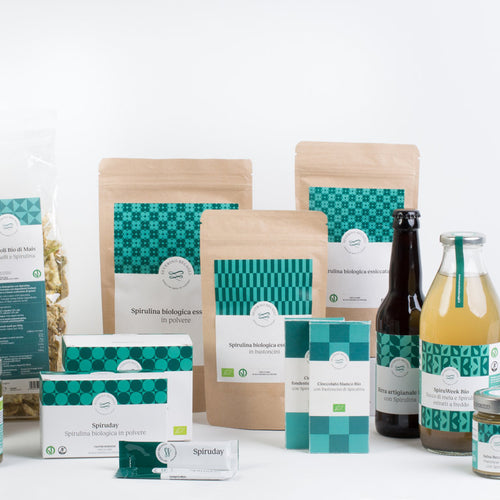
On our website you can buy spirulina online. For haircare in particular, we recommend:
● Spirucap capsules of 500 mg dried spirulina powder, to take 6 a day at any time (perhaps 3 at breakfast and 3 before or after lunch). Athletes can also increase the dose, but in this case they should drink proportionally more water during the day.
● Spirulina Selection Limited: a pack containing 7 sachets and 45 capsules, both of dried spirulina powder. Each sachet is 3 g, the suggested daily dose, and you can also dissolve it in yoghurt, smoothies or other recipes.
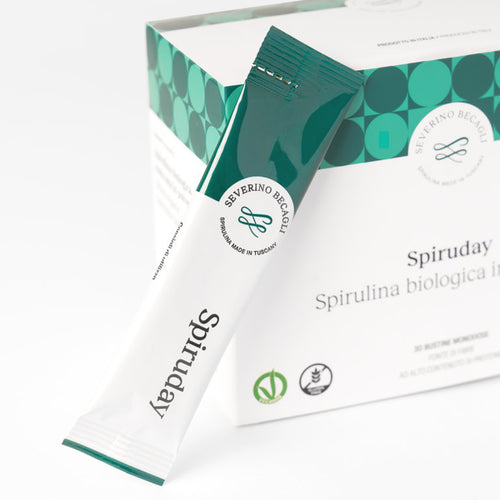
● Spiruday30: a pack of 30 stick sachets, each of 3 g, especially handy when you're out (the 7-sachet alternative is Spiruday7), to add to juices, smoothies or yoghurt.
● Severino Becagli Spirulina Powder, 50 or 100 g: perfect if you want to stock up or make your own hair mask.
● Fresh Spirulina: a green pâté in which the alga is still enzymatically active and immediately bioavailable. It has a more delicate flavour than dried spirulina, with notes of mushroom and pumpkin. You can use 25 to 30 g a day, but it must be eaten quickly.
● Phycocyanin: a spirulina extract that is a kind of fluorescent electric-blue elixir, with very high antioxidant and protein value. You can mix it with yoghurt or soft cheeses, or add it to a glass of water for a refreshing detox drink.
Beyond haircare: other properties of spirulina
Before we say goodbye, we'd like to remind you how truly extraordinary spirulina is. UNESCO and the WHO have called it one of the most nutritionally complete foods. ESA (European Space Agency) and NASA have even proposed growing spirulina during space missions, because this small alga can meet the body's nutritional needs.
Known in botany as Arthrospira platensis, it is rich in:
● vitamins A, D, E (tocopherol) and B group, in particular B1 (thiamine), B2 (riboflavin), B3 (nicotinamide), B6 (pyridoxine), B9 (folic acid), B5 (pantothenic acid);
● chlorophyll and carbohydrates;
● ascorbic acid, gamma-linolenic acid, essential fatty acids (especially omega 3 and omega 6);
● protein and all the amino acids the body needs to synthesise essential nutrients;
● beta-carotene, in amounts 25 times higher than in carrots;
● minerals, particularly magnesium, potassium, zinc, calcium and iron.
In light of its countless nutritional properties, let's look at some of the main health benefits of spirulina:
-
it has anti-inflammatory, detoxifying, toning, energising and purifying properties;
-
it strengthens the immune system when the immune defences are under stress (for example, during the most common seasonal illnesses);
-
it works as a natural supplement that gives the body the energy it needs to face the day;
-
it is perfect for athletes, especially those who compete;
-
it is a high-protein food and therefore ideal as a
meat substitute for people on a vegan or vegetarian diet;
-
it is recommended for people with anaemia because it aids iron absorption;
-
it improves the function of the female hormonal system, relieving period pain and the tiredness typical of the cycle;
-
it supports the nervous system by contributing to the formation of the protective coating of nerve cells;
-
it helps prevent cardiovascular disease;
-
it regulates bad cholesterol levels, reducing the hardening and loss of elasticity of veins and arteries and countering blood viscosity and clotting.